






Reflecting on the Imprint Collective (GDE720)



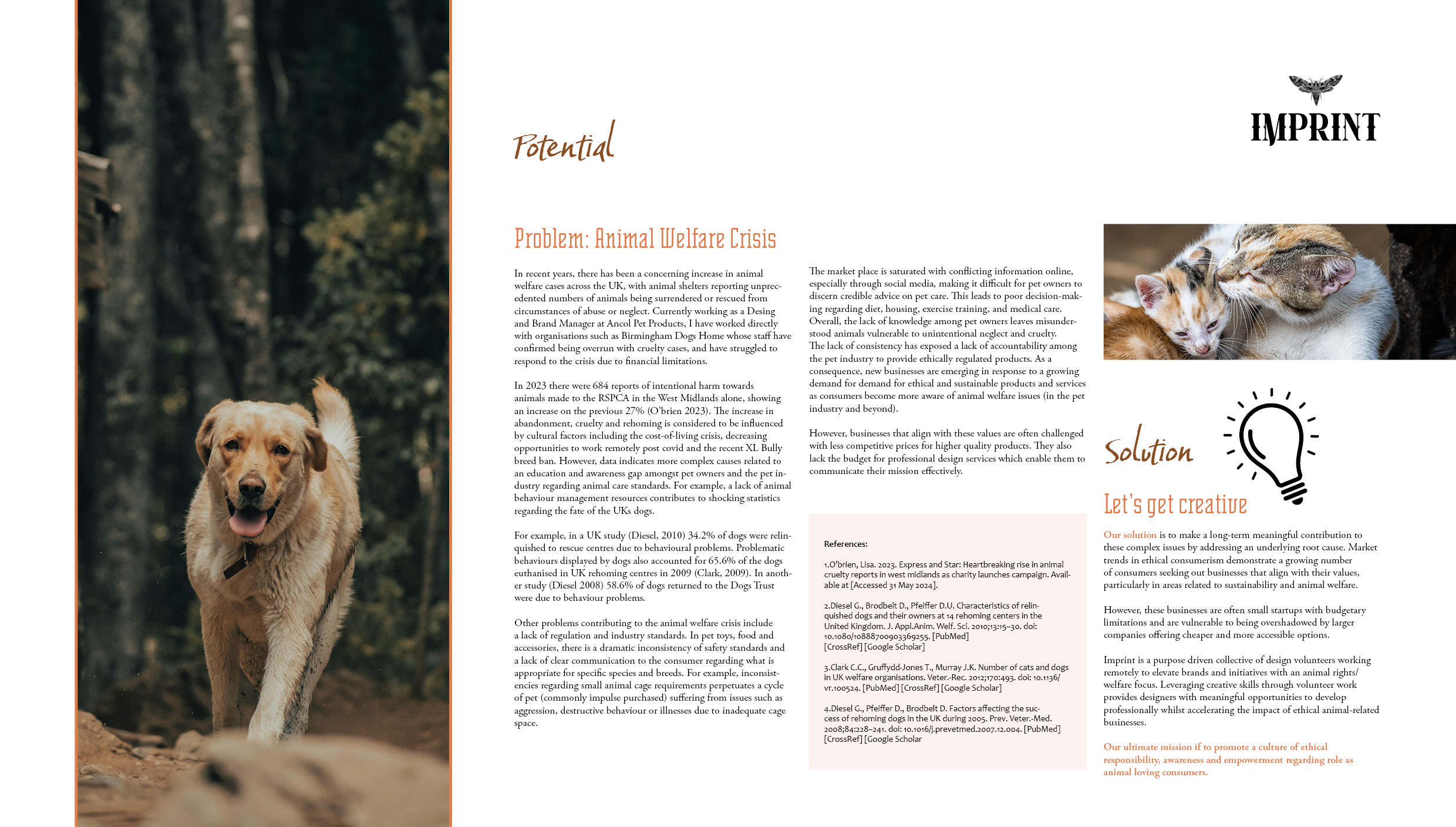
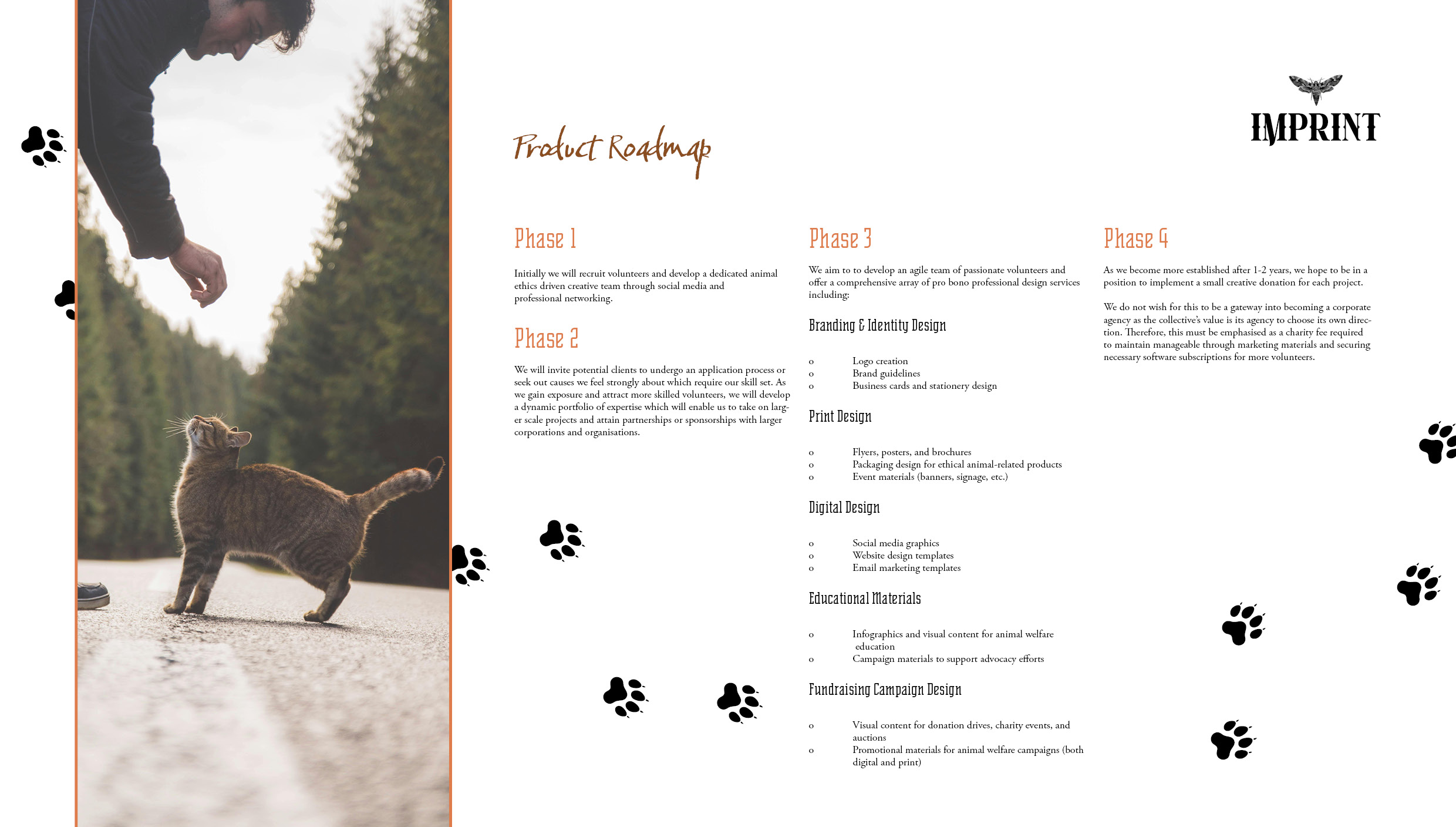


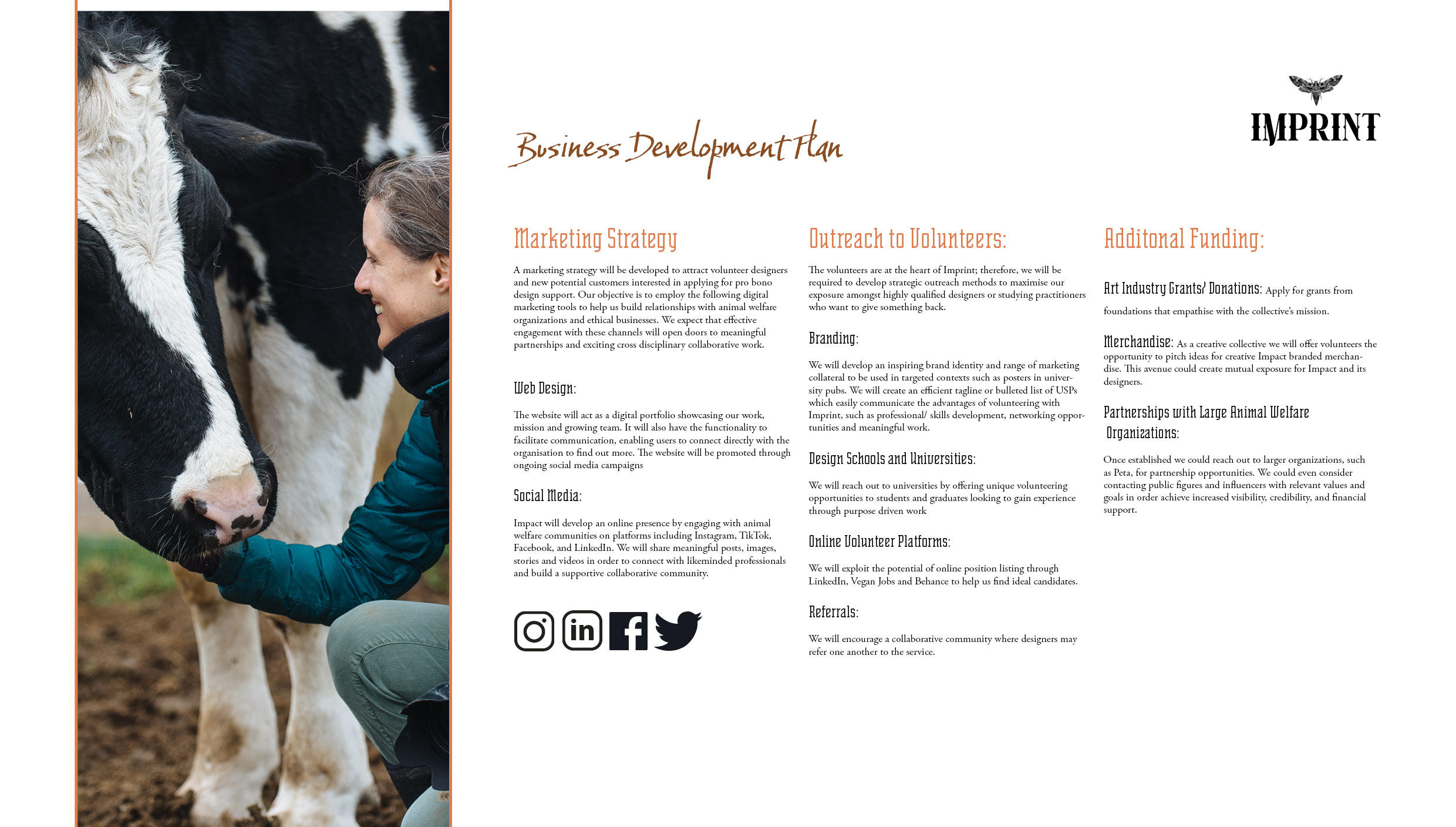

The individual report has provided a valuable opportunity to engage deeply with the themes and questions that have consistently motivated my development as an artist and designer. The integration of academic research within the critical report, alongside a studio practice model, has enabled meaningful reflection on my creative identity and how recurring themes have influenced both my design and fine art practices in distinct yet interconnected ways.
The research and writing phases uncovered several promising directions for future exploration, including areas such as ephemeral media and evolving burial practices. However, my primary objective has been to use the final studio outcome as a means of clarifying how the relationship between these interdisciplinary interests might inform and shape my future practice.
To better understand how I might establish a self-sustaining freelance studio model, I revisited the business plan I developed for the Imprint Design Collective as part of GDE730. This prompted the development of a parallel business plan for my own practice, intended to operate alongside the Collective.
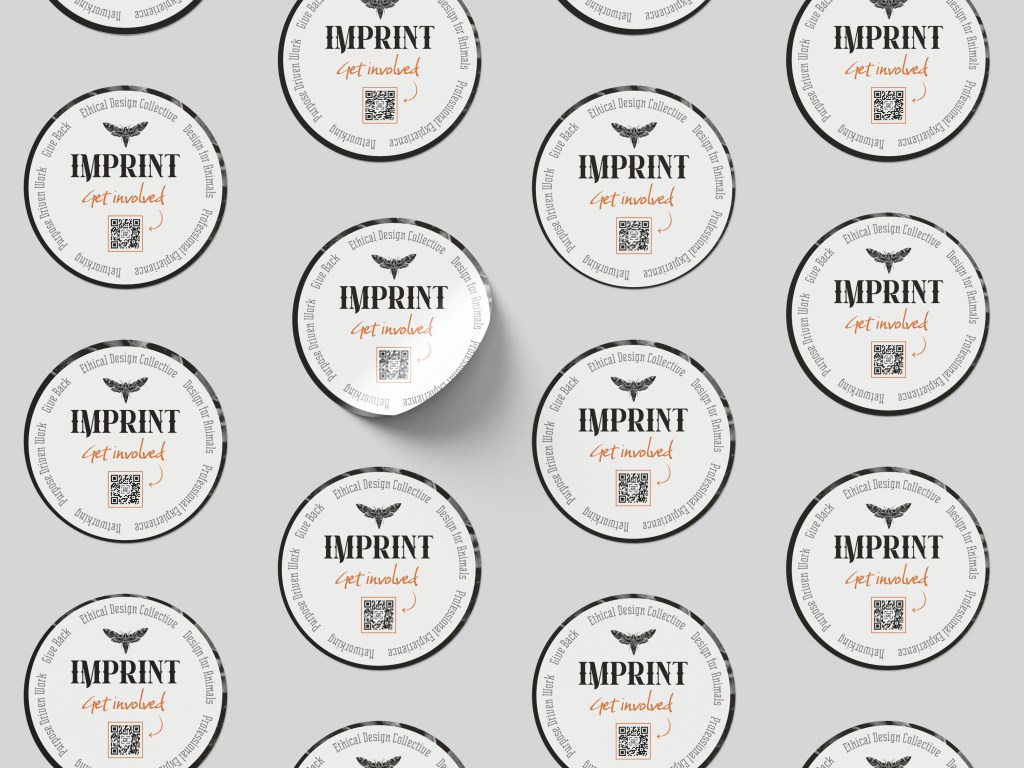
I envision the Imprint Collective as a platform for connecting ethically driven, innovative artists and designers with like-minded organisations seeking creative collaborators for socially valuable projects.
Initially, I was ambitious in attempting to develop both my personal brand and the Imprint Collective simultaneously as part of one overarching project. However, after receiving peer feedback, I was encouraged to reconsider the strategic complexity and practical demands of launching two distinct creative identities. As a result, I made the decision to prioritise my personal brand, allowing me to concentrate my energy and attention on delivering a singular, well-considered outcome.
This focus also supports my desire to continue developing skills in painting and craft-based disciplines, providing a flexible foundation from which my practice can evolve at a sustainable pace following the completion of the MA.
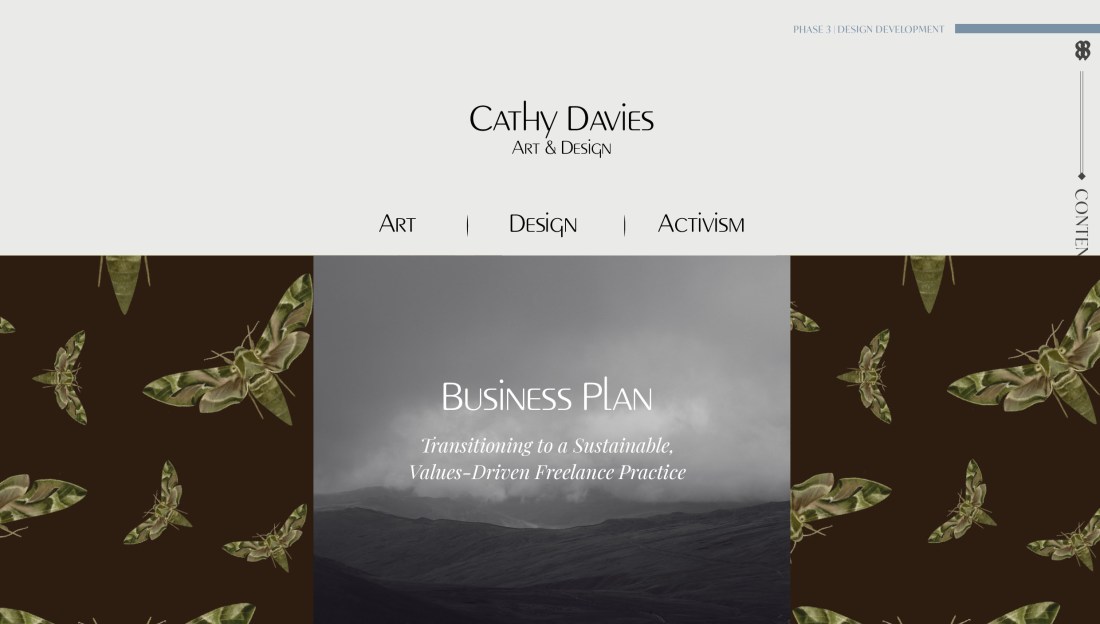
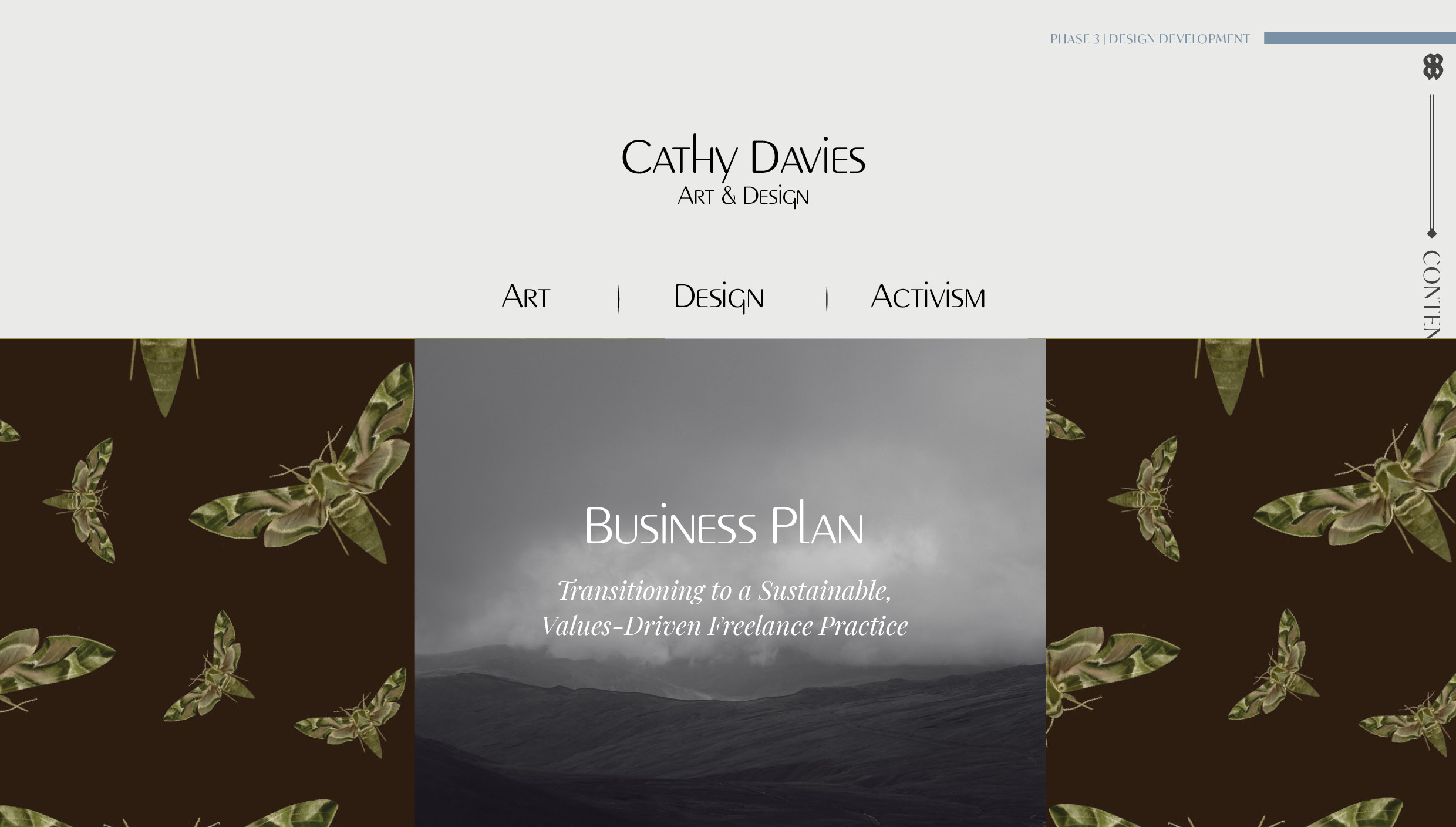
Cathy Davies Art & Design: Business Plan
Market Problem and Opportunity
We are currently living in the Anthropocene—a geological epoch defined by humanity’s profound and often detrimental impact on Earth’s ecosystems. This era is characterised not only by ecological crisis, but also by digital oversaturation and cultural fragmentation. In response, there is a growing societal shift toward seeking deeper meaning, authenticity, and connection—particularly in the ways people engage with products, brands, and creative outputs. As awareness of environmental degradation and social inequality increases, consumers are beginning to prioritise values such as sustainability, transparency, and emotional resonance in their decision-making.
This shift is evident in changing consumer behaviour. A 2023 PwC survey found that 80% of global respondents are willing to pay more for sustainably made goods, even during economic uncertainty (PwC, 2023). This reflects growing demand for ethical, environmentally responsible practices and a willingness to support brands that truly embody these values.
Meanwhile, small, purpose-led startups are rapidly emerging across sectors like sustainable retail, ethical pet care, wellness, and conservation. Often mission-driven, these businesses seek creative partners who not only provide visual services, but also share their ethical and environmental commitments. As the Financial Times (2025) notes, even student-led enterprises are addressing global challenges with innovative, sustainability-focused models—from battery-sharing for rural farmers to urban rewilding initiatives.
Yet many traditional design and marketing agencies fall short. Prioritising scale and surface aesthetics, they often engage in “greenwashing,” price out smaller clients, and lack the emotional and ecological insight needed to communicate sustainability authentically.
This creates a clear opportunity for independent, multidisciplinary studios rooted in nature, ethics, and emotional depth. These practices are uniquely equipped to deliver work that is not only visually compelling but also culturally relevant and environmentally conscious—resonating with a growing audience of thoughtful, values-driven consumers.
The Solution
Cathy Davies Art & Design offers a nature-connected, human-scale alternative to conventional design agency models. In an era marked by digital saturation and ecological uncertainty, my creative practice responds to a cultural and emotional need for reconnection—with the natural world, with meaningful storytelling, and with slower, more sustainable ways of making and seeing.
At its core, this practice is not just about visual communication; it is about ethical design and sublime aesthetics. Drawing on traditions of Romanticism and environmental philosophy, my work is informed by the idea that nature—when approached with sensitivity and reverence—can evoke awe, humility, and emotional transformation. The sublime, in this context, becomes not just a visual language but a value system: one that invites viewers and clients into a deeper, more contemplative relationship with the world around them.
The Designer Problem & Solution
As part of my transition to freelance practice, I aim to align Cathy Davies Art & Design with Imprint Collective—a mission-led, non-profit design initiative developed during GDE730. Imprint is rooted in compassion, creativity, and social good, offering pro bono creative support to ethical, animal-focused businesses and welfare organisations. It fosters solidarity among independent designers seeking purposeful work, while empowering socially conscious enterprises with thoughtful, values-aligned design.
By operating under the Imprint umbrella, designers benefit from the collective’s ethical reputation and community support, while retaining autonomy over their own visual identity and professional direction. This hybrid model enables practitioners like myself to contribute to meaningful causes within a collaborative, ethically grounded framework—supporting both personal growth and wider cultural impact.
As a designer deeply invested in animal ethics and environmental responsibility, this approach reflects my commitment to using creative practice as a tool for advocacy, care, and positive change.
Revenue Streams
My primary source of revenue will come from graphic design clients, offering traditional services such as branding, visual identity, packaging, and marketing collateral. However, the freelance model provides the flexibility to explore multiple creative avenues that align with my multidisciplinary art and design practice. These include:
- Freelance client work (graphic design and illustration)
- Commissioned fine art paintings
- Online shop sales, featuring fine art prints, cards, and merchandise
- Art licensing allowing external parties permission to use illustrations and fine art to be reproduced on a range of products
In the longer term, I plan to expand into new income streams that grow engagement and diversify my practice, such as:
- Workshops and retreats, focused on painting, nature connection
- Ceramic sculpture, exploring form, texture, and natural motifs through a tactile, sculptural medium that complements my visual art practice


 CATHY DAVIES