What would you like to be doing that you are not doing in your work?
- Working on a diverse range of projects/ in collaboration with businesses or organisations that I share a common purpose with.
- Implementing strategy in order to influence the future development of a project/ brand
- Original thought: creating imagery that reflects my own values and creative aspirations
- Influencing culture – using design to engage in, raise awareness of and influence current cultural issues.
- Exploring socially responsive design/ design for social good/ activism
- Experimentation: testing materials, exploring physical design production methods
- Challenge
- Personal projects: developing my own unique visual language/ creative identity through personal projects influence by my fine art background and personal interests
How important are side projects and are you currently working on any?
Notes from case studies:
- Boundaries between work and enjoyable personal practice – does the professional work context spoil/ alter how we experience our personal practice? (Sam Winston).
- ‘Amorality of industry’: social engagement (Sam Winston).
- Reverse psychology of ‘doing nothing’: triggers new ideas (Sam Winston).
- Creating an identity through side projects – creative authorship – helps to define your practice – activism (Regular Practice)
- ‘No compromise… no client interjection… [side projects] say a little bit more about my self than a typical portfolio (Sarah Boris)
- Do side projects need to be commercial?
Critical Reflection:
Before watching this week’s case studies, the idea of side projects seemed a little like a luxury, assuming free time which is difficult to find when working full time and studying the MA. However on reflection, side projects are an essential part of our creative development as they allow us to shape our own visual language and explore topics which inspire us.
On reflection of my own branding and visual identity side projects, the final outcome seems in some ways less satisfying than autonomous fine art projects as they are the product of collaboration and client negotiation and therefore don’t fully represent individualistic output. I have also found this dilemma of authorship in my experience as a Junior Designer, where creative decisions are influenced by corporate hierarchical dynamics and collaboration with marketing teams. For this reason, I resonate with the common theme within the case studies of finding relief from commercial, corporate demands of our day jobs in our self-directed side projects.
I really liked how Adrian Talbot described it as ‘retreating into a world that you own’, as this accurately describes the introspective, almost therapeutic experience of autonomous creative activity such as painting or sculpting. This weeks material has inspired me to consider future side projects which enable me to explore and contribute to subjects that I’m passionate about such as nature, environmentalism and animal rights.
Recently Completed Side Project: Abigail Durham Gardens (Logo Design)
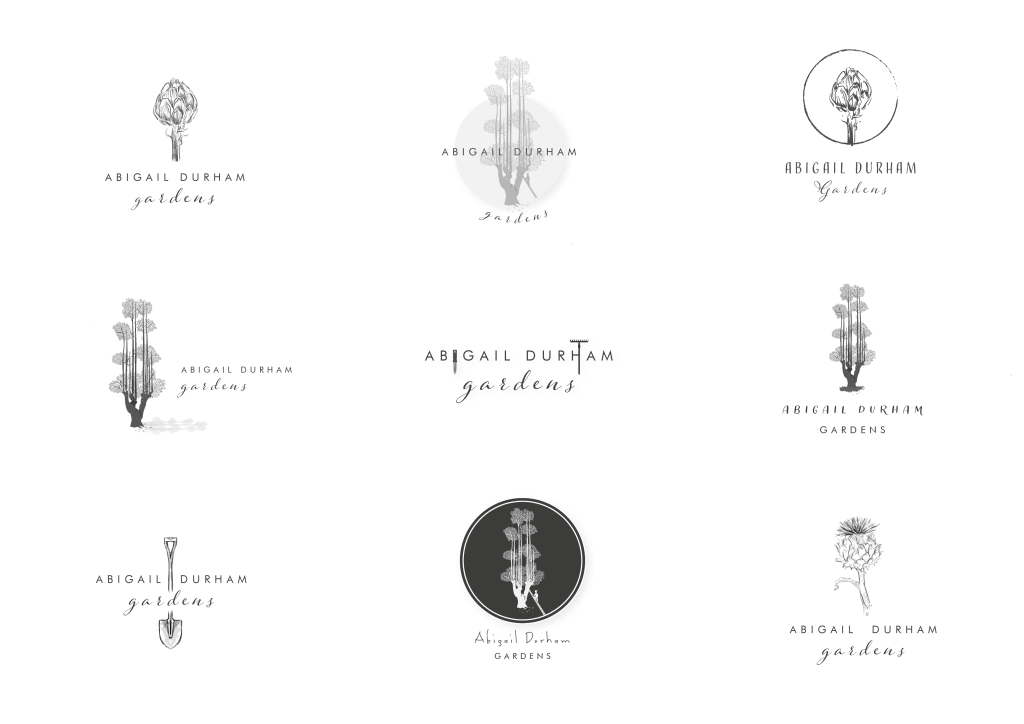
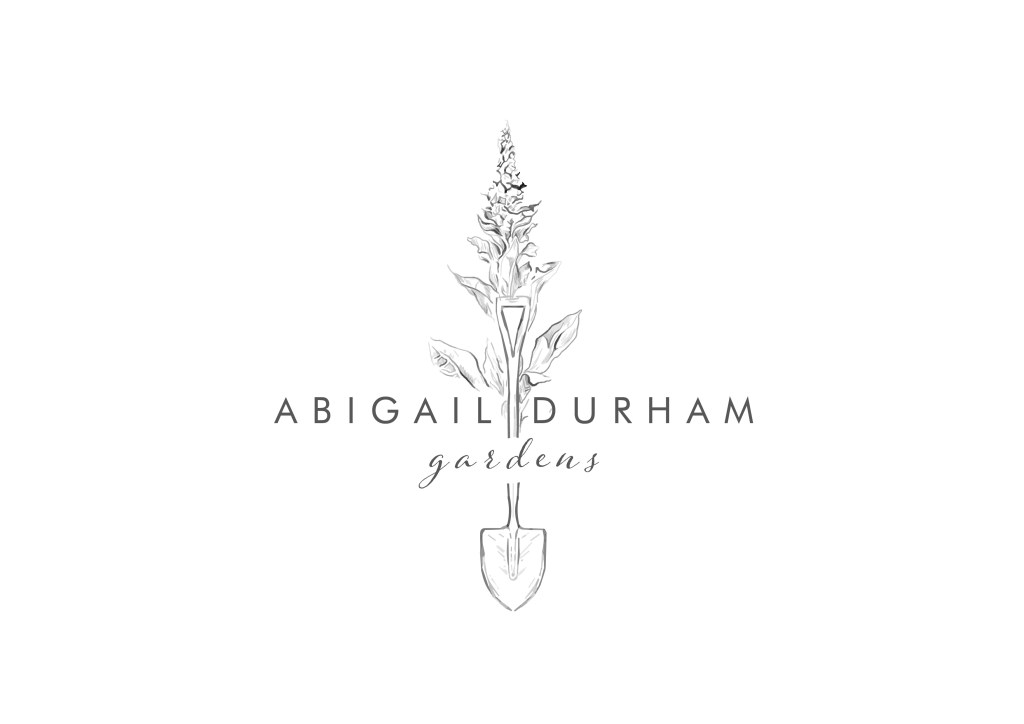
In response to the initial brief, I wanted to create a horticultural logo which reflected the clients fine art background and creative approach to landscaping. I experimented with hand drawn illustrative styles and processes, however the complexity of these images proved difficult to simplify down in order to function as a logo. The client settled on a simplistic logo mark including a hand drawn gold spade, representing her own favourite tool. Although I enjoyed this project and gained valuable experience in client liaison, in hind sight of this weeks material, I feel a need to pursue my own creative projects which enable me to explore themes and ideas of my own choosing without boundaries.
Final Decided Outcome
Brian Eno (2017, April 5). How to Beat Creative Block.
- ‘Under pressure you forget all your best ideas’
- ‘Notice the mistakes’
Applying constraints to force new perspective, idea generation:
Using strategic tools/ approaches to transcend normal habitual way of working – choosing at random in the form of cards to diversify and challenge creative approaches and develop new ideas and outputs. This process reminds me of experimental mark making tasks during Foundation and BA which encouraged students to break out of their comfort zones and discover new territories by interrupting their regular processes and forcing them to adapt their approach.
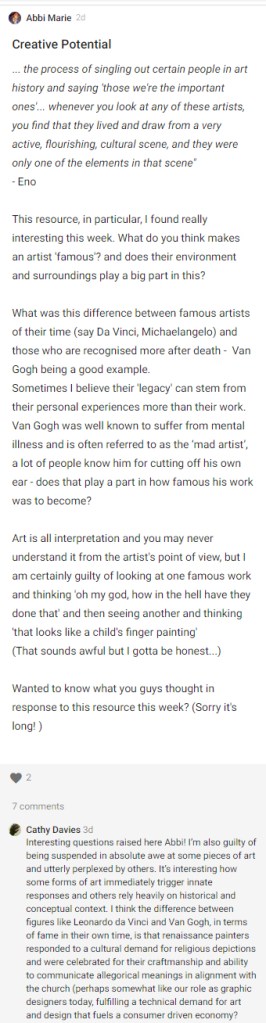
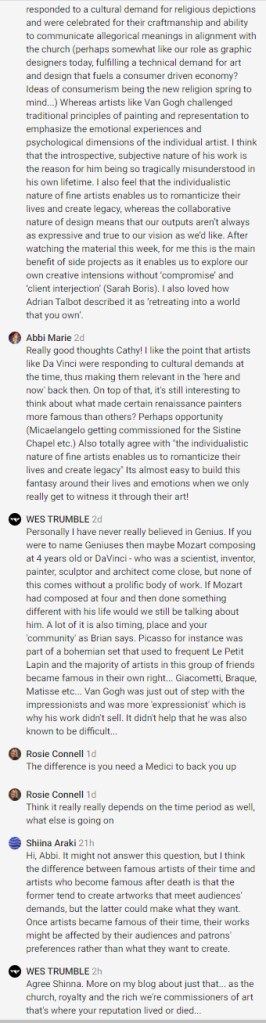
Brian Eno (2017, April 5). On Creative Potential.
- Cooperative intelligence
- Genius – Senius vs Genius : creative intelligence of the individual vs community
- Creative behaviour
- Emphasis on individuality
- Intelligence is generated through cooperation
The themes of individuality and collaborative intelligence reflect the dilemma of ‘authorship’ discussed earlier in collaborative design work.
Ideas Wall:
The School of Life (2015, March 23). Keep Going.
- Importance of vulnerability
- Route to connection and respect
- Humanises
- Exchange of sympathy and consolation for the troublesome business of being alive
- Good vulnerability – generous, strong
- Empowering vulnerability: Acknowledging our weaknesses. Constructive and valuable in the context of self reflection as well as in the dynamics of professional relationships/ team dynamics.
Further Research
- Transformative design: finding value in the damaged and the broken
- Dr Guy Keulemans illustrates how we can preserve and enrich our culture through repair and reuse.
Workshop Challenge
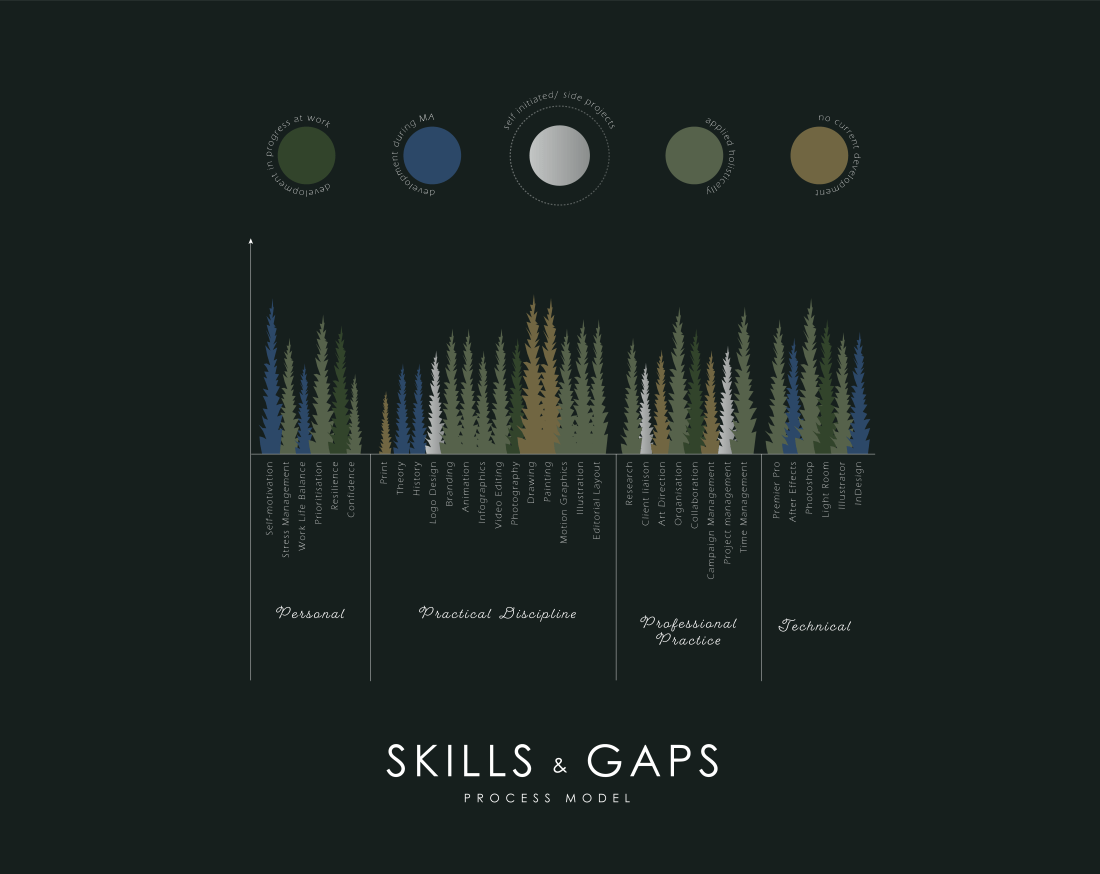
What skills do you have? What skills do you need?
List of skills
Software
- Premier Pro
- After Effects
- Photoshop
- Illustrator
- InDesign
- Light Room
Practical Discipline
- Motion Graphics
- Illustration
- Editorial/ Layout
- Video editing
- Logo design
- Branding
- Animation
- Infographics
- Drawing
- Painting
- Photography
- Theory and history
Professional Practice
- Art Direction
- Campaign Management
- Project management
- organisation
- Research
- Time Management
- Collaboration
- Client liaison
Personal
- Stress Management
- Resilience
- Confidence
- Work life balance
- Prioritisation
- Self-motivation
Research
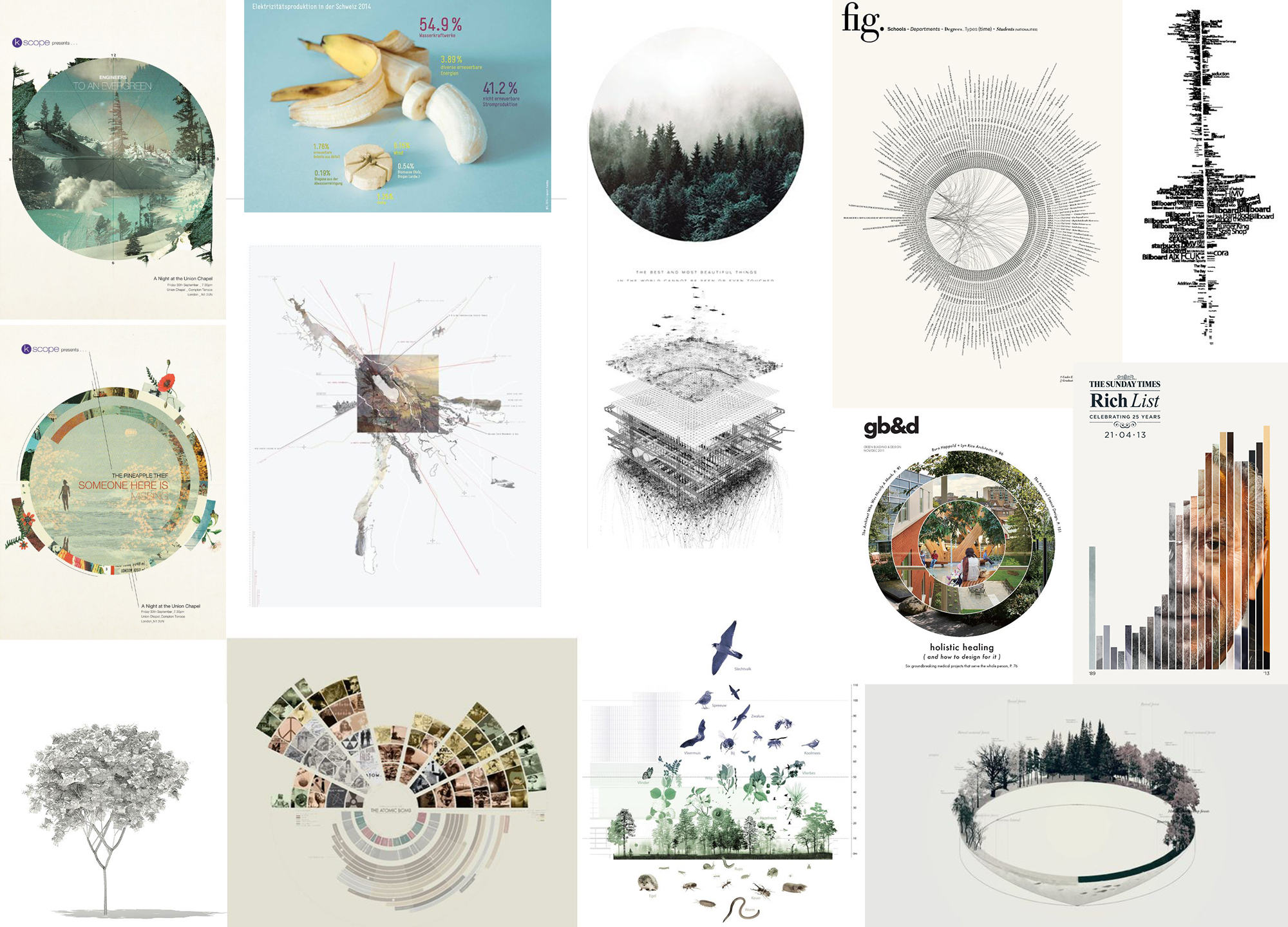
Mood Board: Infographic Inspiration
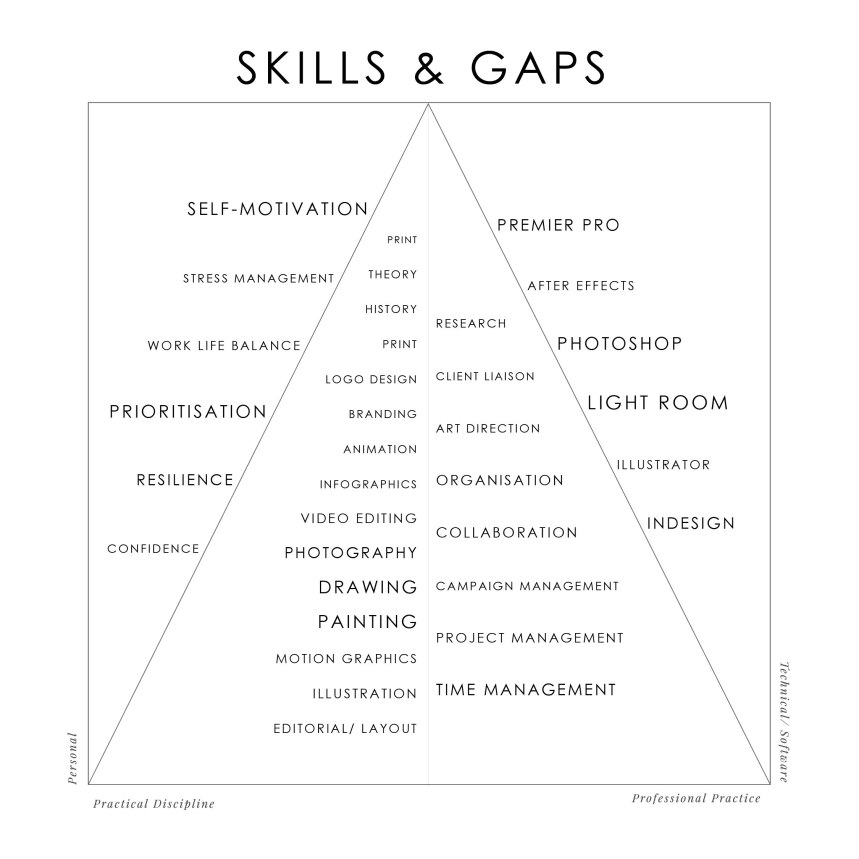
Exploration: Experimentation with concept, layout and ways of categorising skills
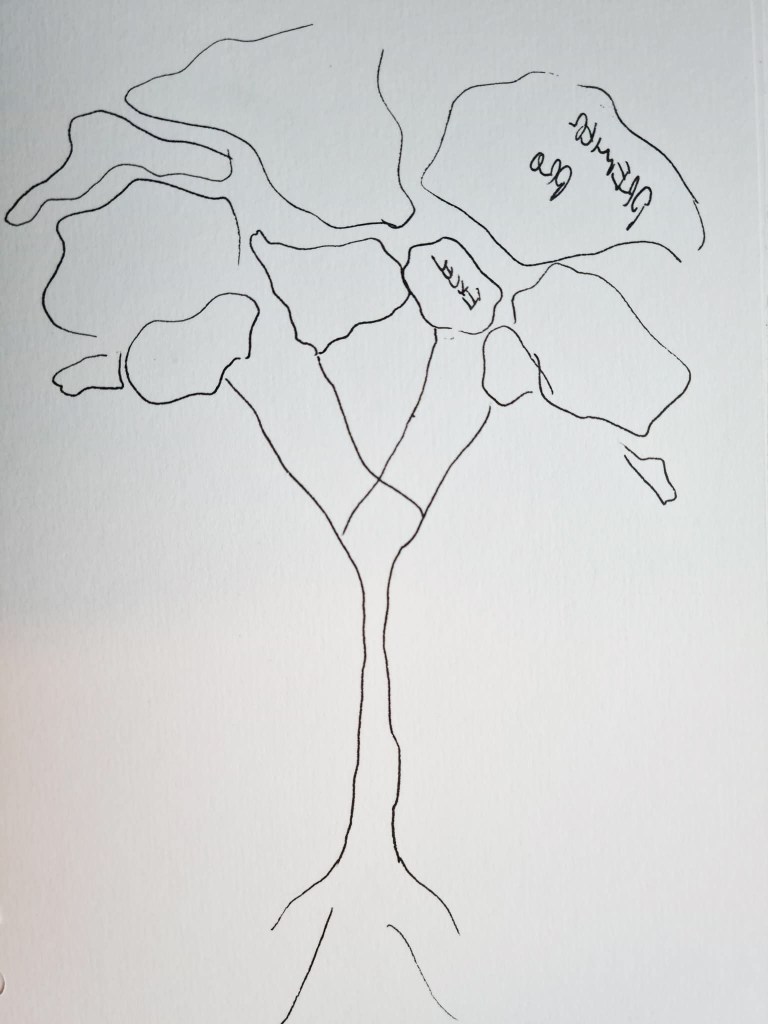

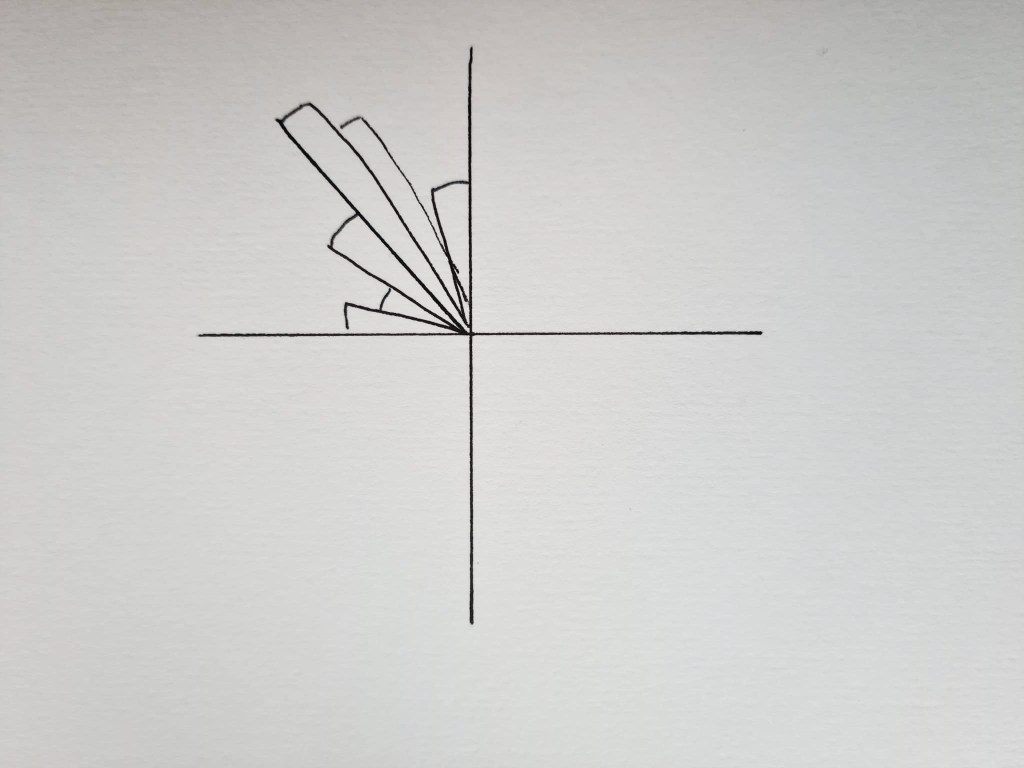
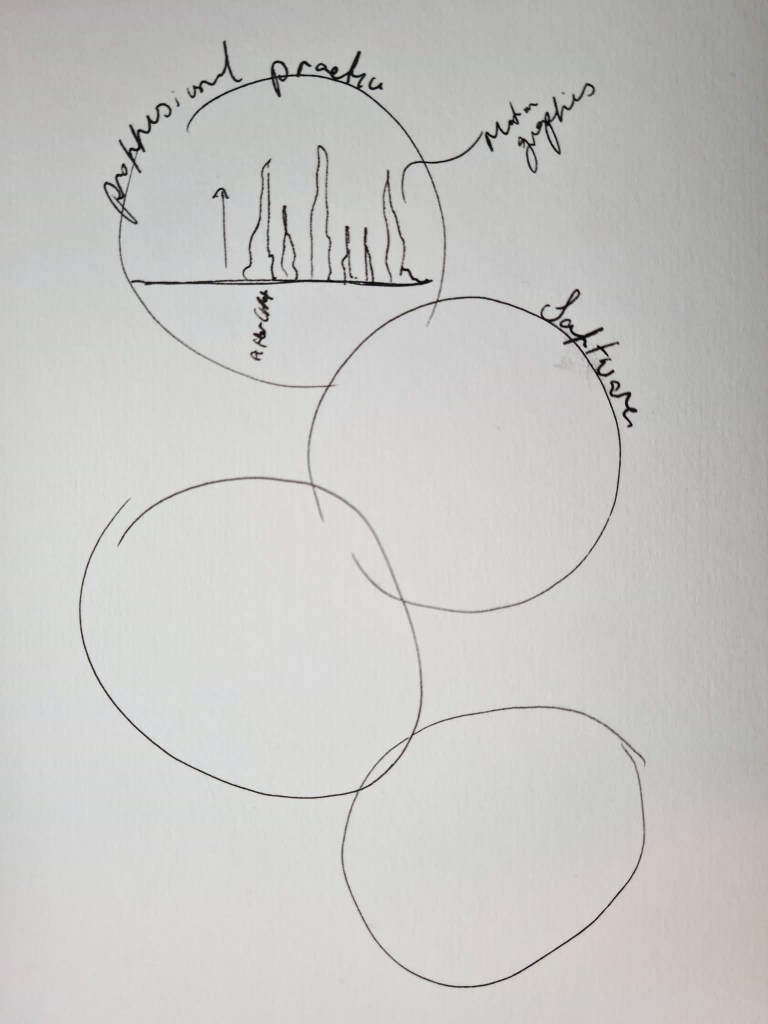


Development

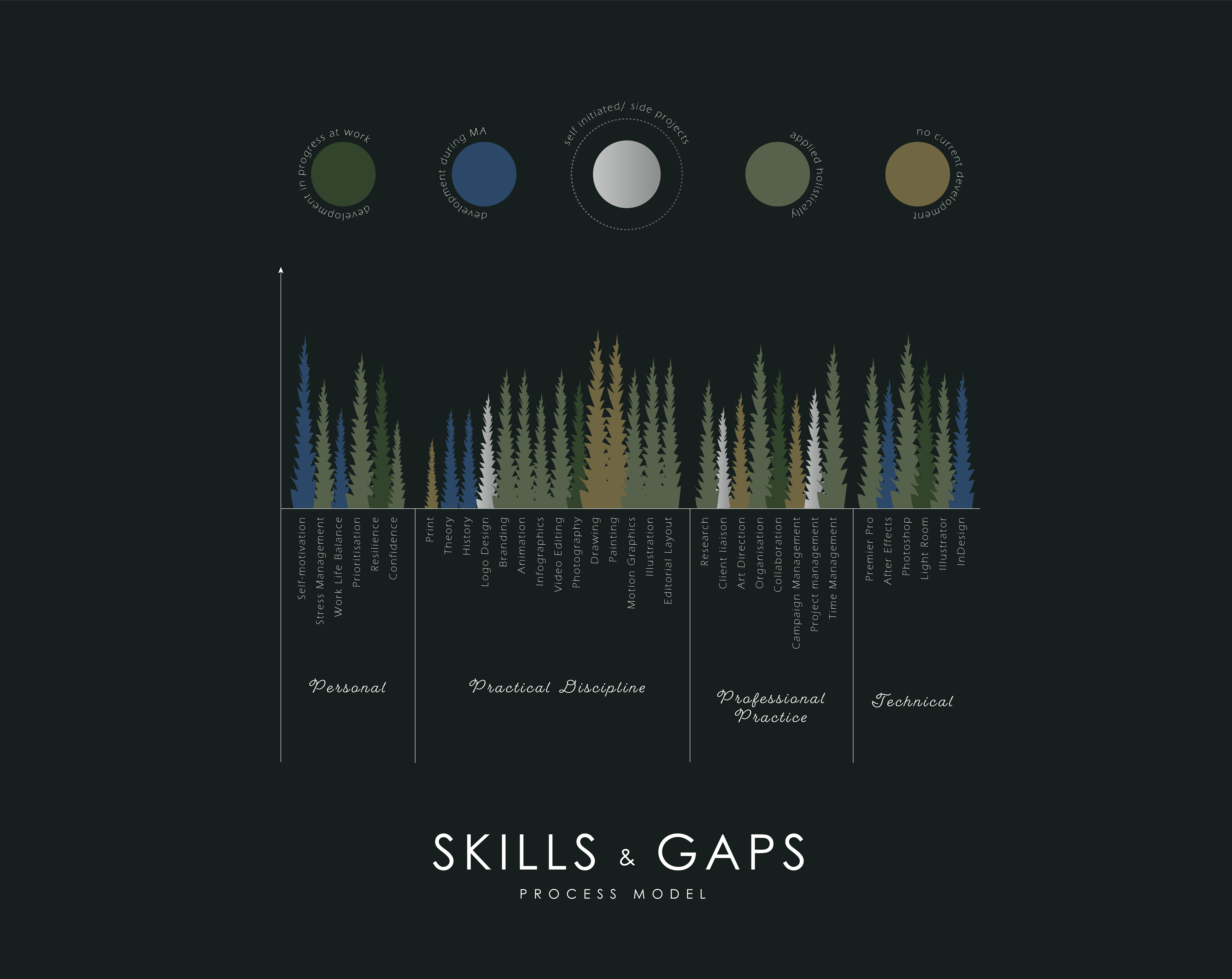
Final Outcome
Critical Reflection:
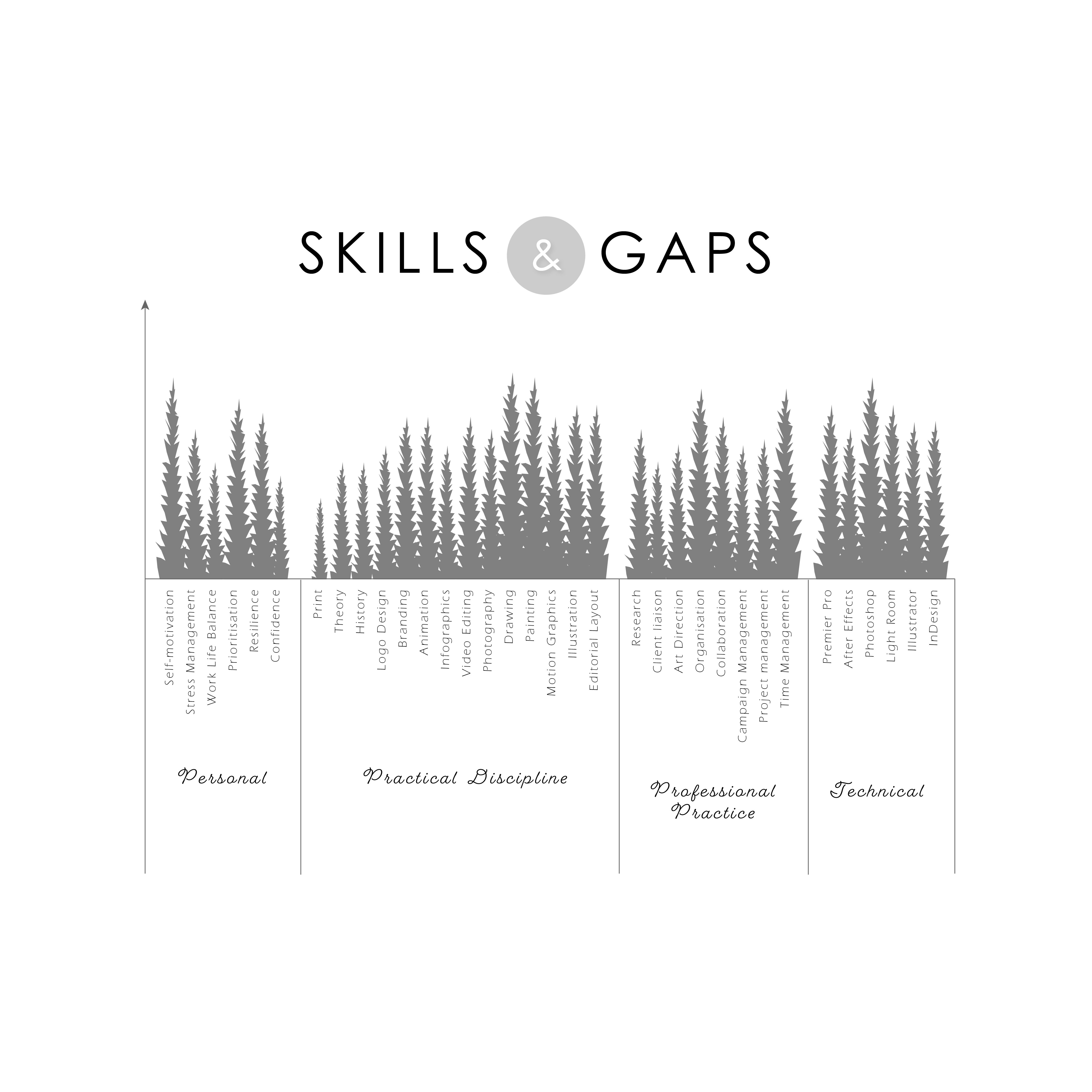
I used colours from photographs of the forest to create an authentic organic palette to compliment the natural theme. I thought that trees were appropriate to use in the infographic as they associate growth and development. The colour guide contributes to the layout creating a sense of landscape and relationship between the sky and earth. I’d like to explore the movement/ growth of the trees as a motion graphic as this would communicate the underlying themes more deeply. I’d also like to vary the tree illustrations in order to emphasise the organic forest concept.

 CATHY DAVIES